
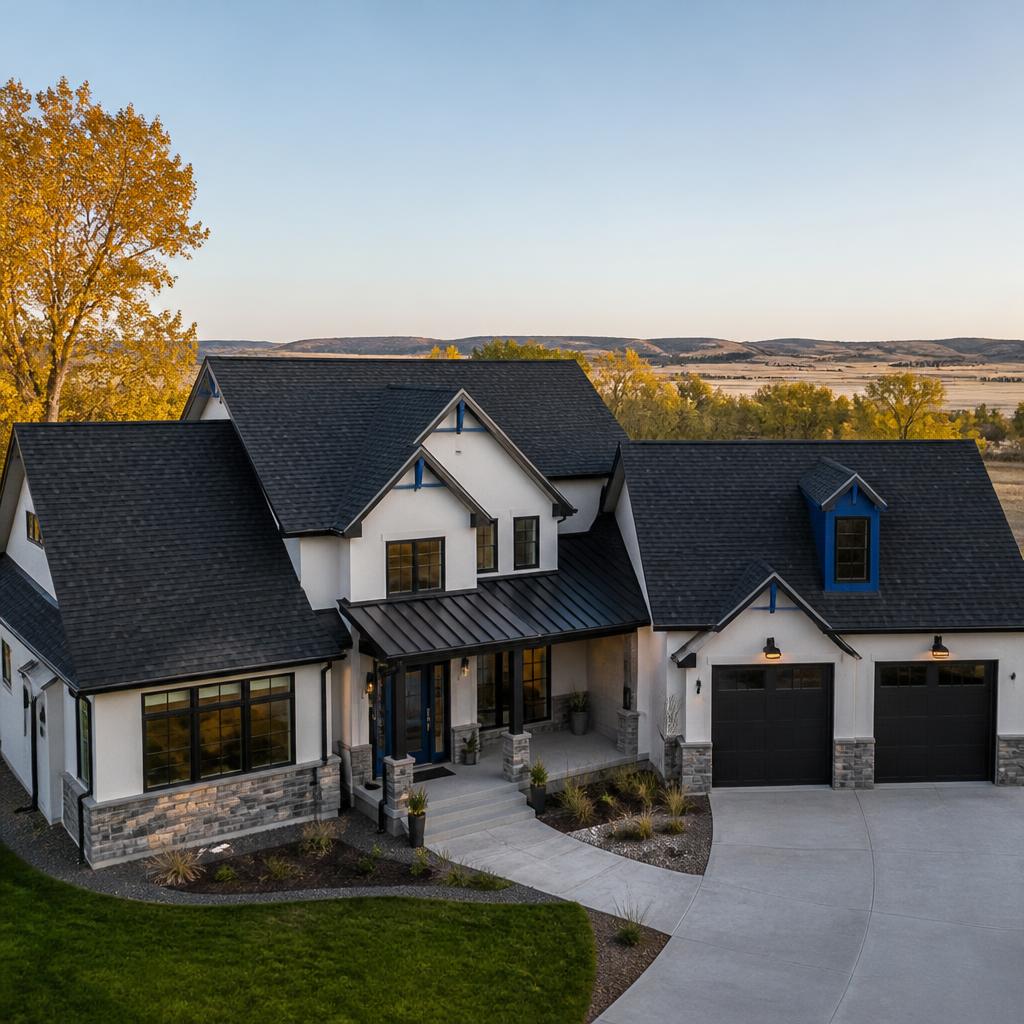
What hail and wind leave behind
- Bruised or fractured shingle mats and exposed fiberglass
- Granule loss in round, hit-shaped patches
- Dented vents, flashing, gutters and downspouts
- Creased or lifted shingle tabs from straight-line wind
- Dents on soft metals around the property, which indicate hail size
The first seventy-two hours
Safety
Stay off the roof and away from downed lines.
Photograph
Ground-level photos of roof, gutters, siding, vehicles and yard.
Protect
Tarp or board open areas to prevent further loss. Keep receipts.
Inspect
Have the roof examined and documented in writing.
Notify
Contact your insurer and read your policy deductible terms.
Working with your insurer
Your insurer decides coverage; a roofer cannot. What we can do is document conditions accurately so the conversation is based on facts. Be cautious of anyone who promises an outcome or asks you to sign over claim rights before scope is understood.
Wind is its own category
Wide open terrain means wind damage can occur without hail. Look for missing tabs, lifted ridge caps and debris impact. Sealed-strip failure from age can make older roofs more vulnerable.
Common questions
As soon as it is safe. Early documentation avoids disputes about what happened when.
Yes. Bruising may not show leaks for months, which is why a written inspection helps.