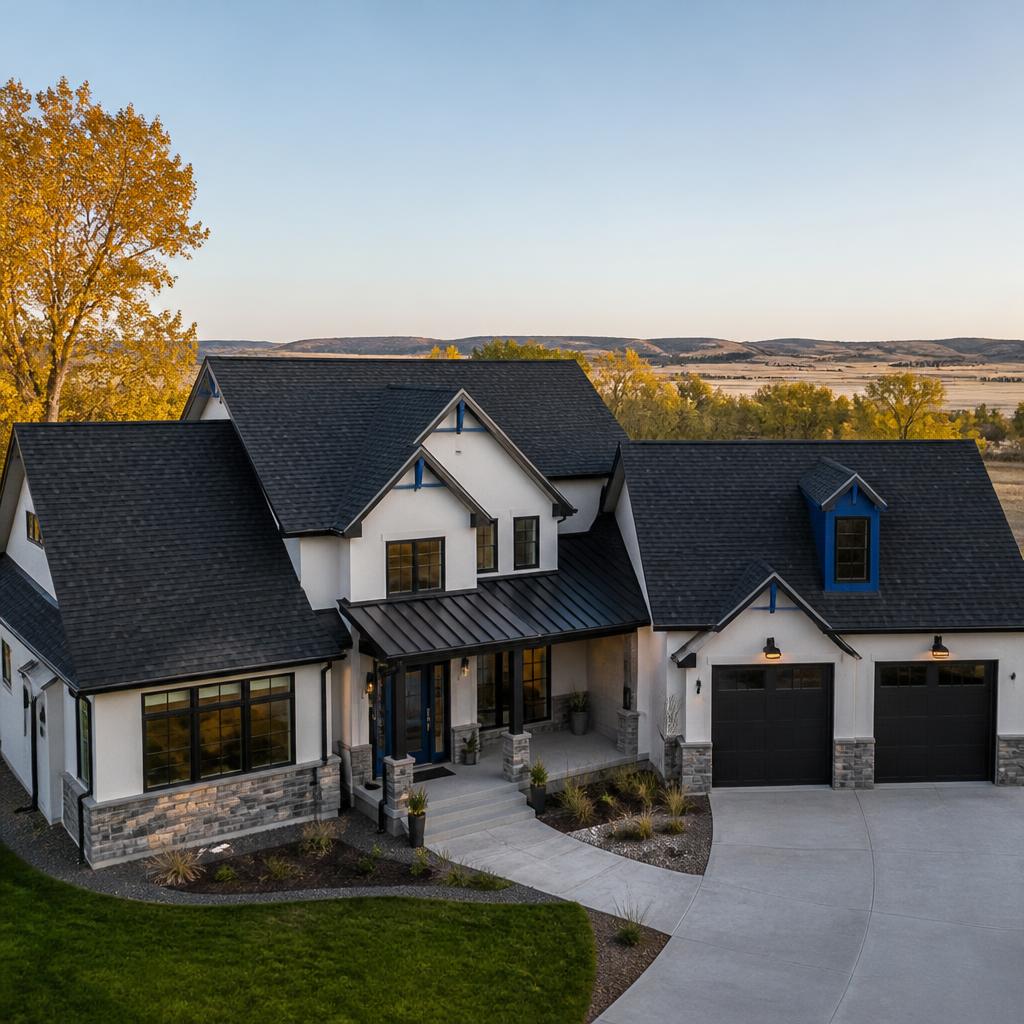
What we do on homes
Every residential service starts with the same question: where is water going, and what is it getting into?
- Full tear-off and replacement with asphalt shingle or standing-seam metal
- Targeted repair of flashing, penetrations, valleys and storm-lifted shingles
- Hail and wind damage documentation and recovery
- Condition inspections for owners, buyers and sellers
- Attic ventilation and insulation checks as part of any roof decision
A roof is a stack, not a surface
Shingles are the visible layer, but the roof deck, underlayment, ice barrier, flashing and ventilation decide how long the system really lasts. A good proposal names each layer and says why it is there.
| Layer | Job | What to ask |
|---|---|---|
| Deck | Structural base for everything above | Is any decking soft, stained or delaminated? |
| Ice and water barrier | Backs up eaves and valleys against ice dams | How far up the slope does it run? |
| Underlayment | Secondary water shedding layer | Which product, and over the whole deck? |
| Flashing | Seals chimneys, walls, vents and valleys | Is it reused or replaced? |
| Ventilation | Keeps deck cold in winter and cool in summer | Is intake equal to exhaust? |
Choosing a material
Asphalt shingles remain the most common home roof across the region and come in impact-resistant lines worth discussing for hail exposure. Standing-seam metal sheds snow readily and suits owners planning to stay long term. We explain tradeoffs in cost, noise, snow behavior and repairability rather than steering you to one answer.
Where to begin
If water is already entering, start with repair. If a storm just passed, start with storm damage documentation. If the roof is simply aging, an inspection gives you a dated, written baseline to plan around.