
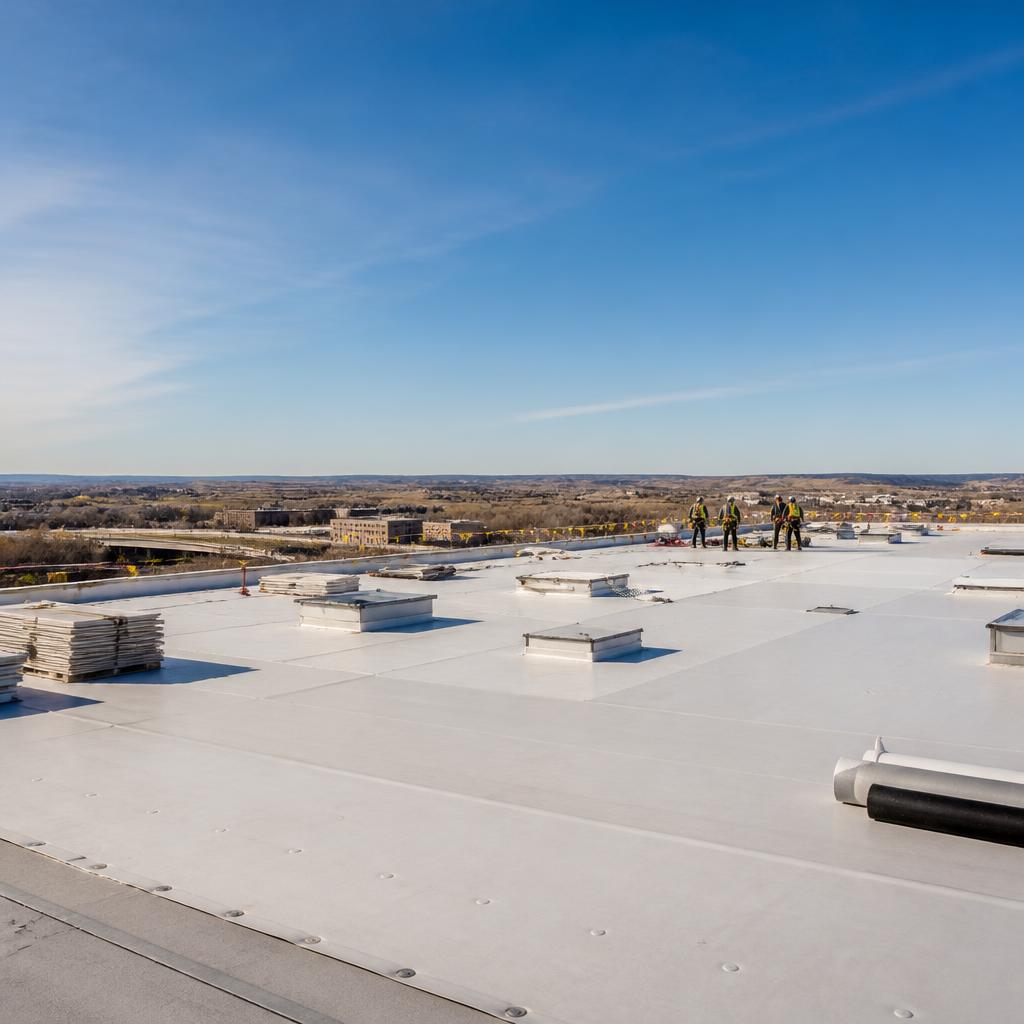
Low-slope systems in plain terms
Flat roofs are never truly flat. Drainage, seams and penetrations are the whole game.
| System | Character | Watch for |
|---|---|---|
| TPO or PVC single-ply | Reflective, heat-welded seams | Seam condition and punctures near equipment |
| EPDM rubber membrane | Flexible, long-established | Shrinkage at edges and seam adhesive |
| Modified bitumen | Layered, torch or adhesive applied | Granule loss, blistering, ridging |
| Metal panel | Steep or low slope, fast shedding | Fastener backout and sealant at details |
Planning with an operating building underneath
- Phase work by section so tenants and inventory stay protected
- Document existing conditions with dated photos before any tear-off
- Identify ponding, clogged drains and failed scuppers early
- Coordinate rooftop unit disconnects and curbs with your mechanical vendor
- Leave a written scope that insurers, lenders and managers can read
Snow and ice are structural topics
Drifting against parapets and rooftop equipment concentrates weight in places the original design may not have emphasized. Any roof decision on a larger building should include a conversation with the building owner or engineer about load, not just membrane.
For owners with more than one roof
Inspect everything once, rank each roof by condition and exposure, then spread repair and replacement across budget years. A ranked list beats an emergency.
Common questions
Sometimes. It depends on insulation moisture, membrane condition and remaining service life. A moisture survey and core samples give the honest answer.
Lease terms vary. We scope the physical condition and provide a written document you can share with the party responsible.